
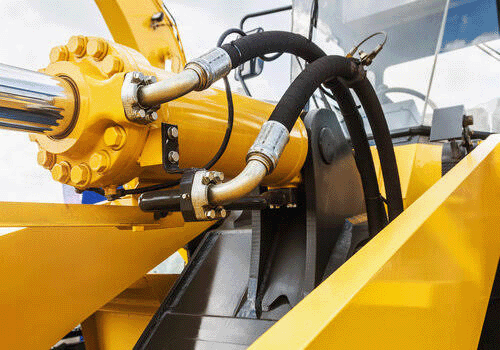
I. Why is hydraulic system flushing necessary?
You can think of a hydraulic system like the blood vessels in the human body. If there are impurities in the blood, they will eventually clog vessels and damage organs. The same applies to hydraulic systems:
- Metal debris circulates continuously: Metal particles generated by the wear of pumps, motors, and cylinders travel with the fluid, wearing down other precision components and causing newly installed parts to fail prematurely.
- Changing oil is not the same as cleaning: Standard oil draining cannot fully clear areas like cylinder interiors, valve block channels, coolers, and long pipelines; residual old oil and impurities remain, immediately contaminating the fresh oil upon refilling.
- Contaminants shorten component lifespan: Precision components such as proportional valves, servo valves, and high-pressure pumps are highly sensitive to tiny particles. Impurities can cause valve spool sticking, pressure instability, erratic movement, and elevated oil temperatures.
- Downtime costs far exceed repair costs: When equipment at factories, mines, or ports shuts down, the costs associated with project delays, production line stoppages, and idle labor often far outweigh the actual repair expenses. Proactive flushing is a cost-effective form of preventive maintenance.
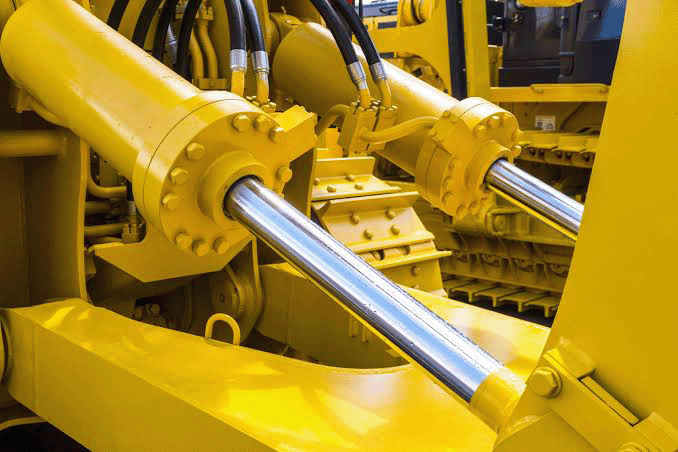
II. When is flushing required?
- Before putting new equipment into service: Welding slag, metal chips, seal fragments, and dust can remain from welding, assembly, and pipe-bending processes. Operating the machine without flushing can easily lead to premature failure and may even void the warranty.
- After major overhauls or critical component replacement: Replacing pumps, valves, cylinders, or piping allows external dust and metal debris to enter the system. Since old sludge and wear particles remain in the circuit, thorough flushing is essential.
- When hydraulic oil degrades: Signs such as oil turning black or cloudy, emitting a pungent odor, emulsifying (turning milky white), or accumulating heavy sediment at the bottom of the tank indicate severe oxidation and contamination with water and particles. Simply changing the oil is insufficient; the entire circuit requires flushing. 4. When switching brands or models of hydraulic oil: Different oils have different additive formulations; direct mixing can trigger chemical reactions, so the old oil must be thoroughly flushed out.
- When equipment operates abnormally despite no electrical issues: Issues such as sticking or jerky movement in hydraulic cylinders are often caused by impurities clogging orifices or valve spool clearances; timely flushing can restore operation without the need to disassemble valve bodies or piping.
III. How to Flush? A Step-by-Step Guide
Preparation: Inspect piping, fittings, and seals for damage or looseness. Remove or bypass precision components—such as servo valves and proportional valves—beforehand to prevent impurities from entering and causing wear during flushing. Prepare specialized flushing oil, a new return-line filter, filtration/filling equipment, and lint-free wiping cloths.
Step 1: Thoroughly drain old oil. It is best to drain the oil while it is warm, as this makes it easier to remove sludge and particles. Drain oil not only from the reservoir but also from cylinders, return lines, coolers, valve manifolds, and motors.
Step 2: Clean the hydraulic reservoir. The interior of the reservoir is usually the most heavily contaminated area. Wipe the inner walls with lint-free cloths, paying special attention to the bottom, corners, magnetic trap areas, the area around the suction port, and the return zone.
Step 3: Add flushing oil and bleed air. Fill the reservoir to 70%–80% of its rated capacity with flushing oil and start the pump at low speed and low pressure. Open all air bleed valves and close them only when the discharged oil is free of bubbles and impurities; this prevents residual air from causing cavitation damage to the pump.
Step 4: Circulate, flush, and monitor. Adjust pump parameters to ensure the oil flows in a turbulent state within the piping (this maximizes flushing efficiency) while fully cycling the actuators. Periodically monitor the flushing oil for particle count, moisture content, and filter element clogging. A high particle count is normal at the start; the number of particles will gradually decrease as circulation and filtration continue. If contaminant levels remain high after prolonged flushing, or if the filter element clogs quickly, it indicates a significant amount of residual contamination in the system; repeated flushing may be required.
Step 5: Drain the flushing oil. Once flushing is complete, stop the pump, fully depressurize the system, and open all drain ports to empty the oil completely. After draining, wipe down pipe connections and clean the inner walls of the oil reservoir again. Then, you must install a new filter element, reinstall the previously isolated precision components and piping, and ensure all connections are securely sealed.
Step 6: Add new hydraulic oil. Use a filling unit equipped with a filtration system; avoid pouring oil directly to minimize the entry of external contaminants.
Post-flushing inspection: Start the equipment and run it without a load. Observe the actuators for smooth operation and check that pressure and flow rates are stable and normal. Test the cleanliness of the new oil; if particle counts remain stable, it indicates there are no significant residual contaminants in the system.
IV. Common Mistakes (Must Be Avoided)
- Using standard hydraulic oil instead of specialized flushing oil: Specialized flushing oil has low viscosity and high fluidity, allowing it to rapidly remove sludge from dead zones and clear away fine impurities; standard oil has higher viscosity and cannot dislodge stubborn contaminants.
- Failing to isolate precision components before flushing: This is the most common error. Servo valves and proportional valves have clearances of only a few microns; impurities can directly scratch the valve spool and sealing surfaces. Such damage is often irreversible, necessitating the replacement of expensive precision components.
- Reusing old filter elements: Cleaning and reusing an old filter element, or forgetting to replace it before adding new oil, allows impurities to re-enter the hydraulic circuit.
- Not actuating all components during flushing: In systems such as those on excavators, cranes, or hydraulic lifts, contaminants in many areas cannot be removed if actuators do not complete their full range of motion. Each hydraulic function must be operated repeatedly to ensure full-stroke movement.
- Waiting for the flushing oil to cool before draining: After flushing, the oil temperature typically rises to around 50°C; at this temperature, contaminants remain suspended, viscosity is low, and fluidity is high, making drainage more effective. If the oil is allowed to cool before draining, contaminants will re-settle at the bottom of the reservoir and in low-lying sections of the piping. Therefore, the oil must be drained immediately after flushing is complete.
V. Brief Answers to Common Questions
- How often should flushing be performed? There is no fixed schedule; the timing should be determined based on oil analysis, the contamination level of filter elements, and the equipment’s condition.
- How long does flushing take? It depends on the degree of contamination. Mild contamination requires only a short time, whereas large or heavily contaminated systems may require a longer duration or even staged flushing.
- Does the presence of excessive foam in the oil cause problems? Yes. Foam occupies space within the pipes and destabilizes oil flow, preventing the formation of effective turbulence needed to flush out impurities; additionally, the collapse of foam bubbles can cause wear on the pump’s inner walls and accelerate seal degradation.
- Should flushing be done section-by-section or on the entire system at once? Large, complex systems are best suited for sectional flushing, which allows for precise control of flow rate, pressure, and velocity in each pipeline to ensure turbulence is achieved in every segment; small, simple systems are better suited for whole-system flushing, as it is easier to perform and takes less time.
- Does the flushing oil temperature matter? Yes. Excessive temperatures accelerate oil oxidation, leading to the formation of new gums and sludge; conversely, temperatures that are too low increase viscosity, resulting in poor flushing effectiveness. The optimal temperature is approximately 45–55°C for mineral-based flushing oils and 50–60°C for synthetic-based flushing oils.