
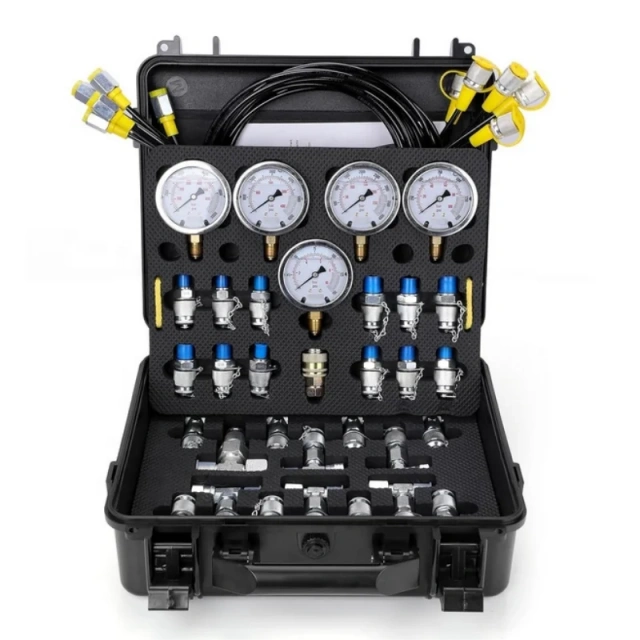
How to Safely Charge a Hydraulic Accumulator?
Accumulators must be charged with dry, high-purity nitrogen (do not use compressed air, as it poses a risk of fire or explosion). Proper pre-charge pressure ensures system stability and extends component lifespan.
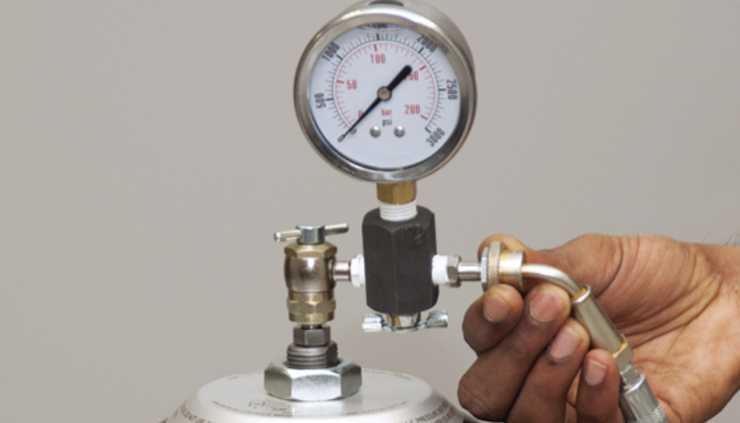
Operational Steps
- Prioritize safety: Shut down the machine and release system pressure, disconnect the accumulator from the system, and wear appropriate protective gear.
- Use the correct charging tools to connect the nitrogen cylinder; first, measure the residual pressure to check for leaks.
- Charge slowly, slowing down further as the target pressure approaches. Do not disconnect immediately after charging; let it sit for 10–15 minutes to allow the gas temperature to stabilize before making final pressure adjustments.
- Depressurize the tools before disconnecting, check the valve for leaks using soapy water, install the protective cap, and document the procedure.
Points to Note for Different Accumulator Types
- Bladder-type: Charge slowly; rapid charging can damage the rubber bladder.
- Diaphragm-type: Ensure precise pressure adjustment; damage usually requires replacing the entire unit.
- Piston-type: Focus on checking for seal leakage.
Common Pitfalls to Avoid
❌ Charging without first releasing hydraulic oil pressure;
❌ Using compressed air instead of nitrogen for convenience;
❌ Charging too quickly and finishing before the temperature stabilizes;
❌ Forcing the valve core with a screwdriver to release pressure (this damages the seal and causes slow leaks);
❌ Forcing the installation of mismatched tool connectors.
Common Issues
- Rapid pressure drop after charging: Usually caused by valve or seal leaks; do not simply keep topping up the pressure—replace the faulty parts.
- Normal immediately after charging, but pressure drops later: The gas hasn’t cooled sufficiently; wait longer before adjusting.
- Nitrogen pressure fluctuates with temperature; account for ambient temperature when charging.
Routine Maintenance
Check once a week after initial installation; once confirmed stable, check the pressure monthly. If the machine operates sluggishly, pressure fluctuates erratically, or the pump cycles on and off frequently, you should immediately check the accumulator’s pre-charge pressure.
Pre-charge pressure requirements vary by application: for energy storage, it is typically set to 90% of the system’s minimum operating pressure; for shock absorption and pulsation dampening, it is set within the 60–90% range, depending on operating conditions.
There is no universal charging tool; you must select a kit that matches the specific valve specifications of your accumulator.