
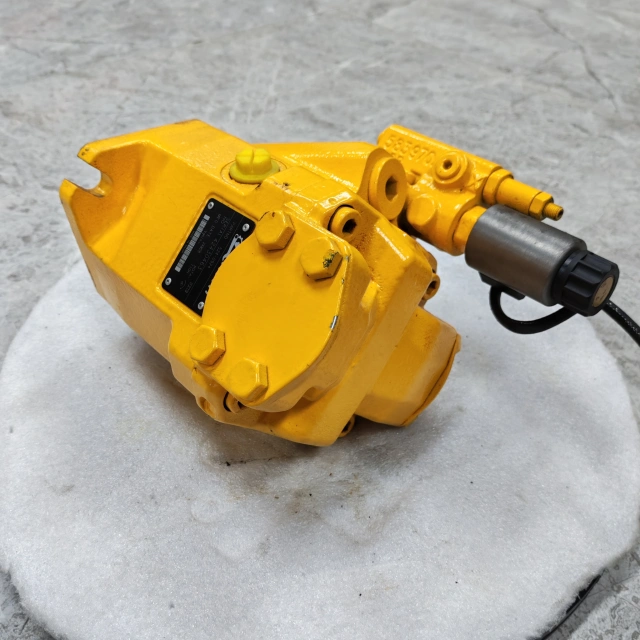
Simply put, it is a hydraulically driven device capable of directly delivering immense force (torque) at very low rotational speeds.
This is primarily achieved through large displacement (usually exceeding 100 cc/rev). Operating speeds are generally below 500 RPM—with some models capable of stable operation at speeds under 10 RPM—eliminating the need for an additional gearbox.
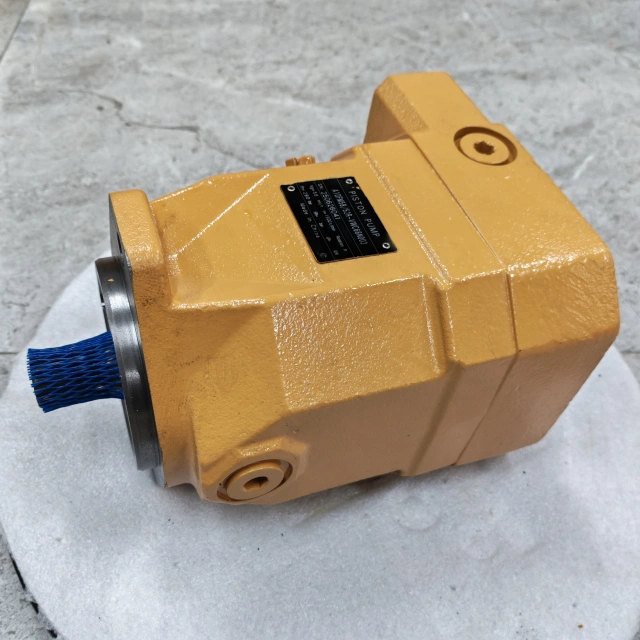
Three common types: How do you choose?
1. Radial Piston Hydraulic Motor
Characteristics: The “king of torque,” delivering exceptionally high torque output (large industrial models can exceed 100,000 N·m). It offers high shock resistance and efficiency, making it ideal for heavy-load, ultra-low-speed applications.
Applications: Heavy-duty scenarios involving frequent shock loads, such as hydraulic winches, mining equipment, and marine deck machinery.
Selection: Choose this if your equipment requires extreme torque and long-term reliability, though be prepared for a higher purchase cost.
2. Orbit (Gerotor/Geroller) Hydraulic Motor
Characteristics: The most widely used type, offering excellent cost-effectiveness. It features a simple, low-cost design, a wide displacement range (50–1000+ cc/rev), and speeds ranging from tens to hundreds of RPM.
Applications: Construction and agricultural machinery, such as excavators and tractors.
Selection: This is the preferred choice if you need to balance performance, installation space, and cost.
3. Axial Piston Hydraulic Motor
Characteristics: Offers superior efficiency and controllability. Suitable for high-pressure operations (350–450 bar) with a wide speed range and precise speed control capabilities.
Applications: Hydraulic systems requiring a wide speed range, high power density, and precise control.
Selection: Choose this if you require higher efficiency and controllability than an orbit motor offers, but do not need the extreme low-speed torque characteristic of radial piston motors.
What are the key advantages?
Direct drive simplifies the transmission: It eliminates the need for gearboxes, chains, and similar components, thereby reducing costs and minimizing potential points of failure. Stable low-speed performance: Specifically designed for low speeds with smooth torque output; some models can operate steadily at speeds below 1 RPM.
High starting torque: Capable of delivering high torque at 0 RPM, enabling smooth startup for heavy-load equipment.
Compact structure: Delivers sufficient torque even in confined spaces.
High system efficiency: Reduces the number of transmission stages, allowing overall efficiency to approach or even exceed 90%.
Adaptability to harsh environments: Absorbs load fluctuations and operates reliably in dusty or humid conditions.
How to select the right model?
When selecting a model, verify the following points in order:
Determine torque: Calculate the torque required for operation, startup, and peak loads, and include a safety margin of 20%–30%.
Determine speed: Identify the minimum, typical, and maximum operating speeds. Note that stable operation at 100 RPM does not guarantee stability at 5 RPM.
Confirm system pressure and flow: Ensure the hydraulic pump can supply sufficient pressure and flow; otherwise, the motor cannot achieve the required power output.
Select appropriate displacement: Higher displacement yields higher torque but lower speed; lower displacement yields the opposite.
Select motor type: Choose the most suitable type based on the requirements above and the provided type descriptions.
Other common questions
Bidirectional rotation: Supported by most LSHT motors; simply swap the inlet and outlet ports.
Break-in period: It is recommended to operate the motor at 30%–50% of its rated load for the first 1–2 hours.
Inspection standards: Check for compliance with ISO 3019 and SAE J744 standards to ensure compatibility regarding mounting dimensions and interfaces.
Hydraulic oil: High-quality anti-wear hydraulic oil is recommended (e.g., ISO VG 32, 46, or 68); oil viscosity and cleanliness are more important than the brand.
Service life: Capable of stable operation for thousands of hours under rated conditions, provided the hydraulic fluid remains clean. Overall, the key to selecting the right LSHT motor lies in finding the optimal balance for your equipment among torque requirements, speed specifications, system pressure, installation space, and budget.